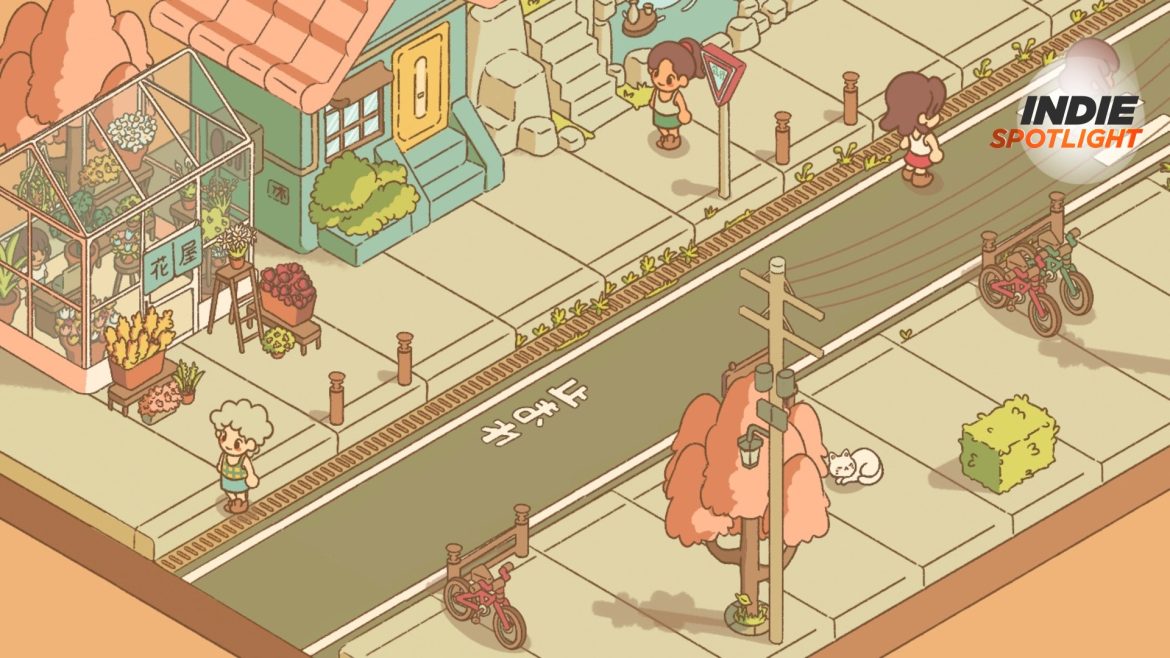
I’m trying to complete a mission in Minami Lane with the single most important objective: attract more cats. How do I do that? By increasing the beauty rating of my little street diorama that’s mine to build up and manage. From renovating existing houses to make them more aesthetically pleasing, to adding a picturesque onsen where my residents can relax, I set down some kombini stores to rake in more cash so I can afford more beautifying upgrades. Some other objectives bring in an added layer of challenge, though, such as one that stipulates I can only have a set amount of buildings to draw in at least four cats every day.
But even with some strategy involved, it’s an incredibly laidback management experience overall, and the optional side objective to pet a certain amount of cats is of course one I’m all too happy to fulfill. When my street starts to really come together with feline friends aplenty, I sit back to watch the satisfaction meter of my residents understandably skyrocket. I mean, who wouldn’t be happy to walk down a lane and see so many kitties?
I’ve been meaning to play Minami Lane ever since I saw it take off on Steam last year, and with its recent console release on PS5 and Xbox Series X (it’s also available on Xbox Game Pass), I had to finally give it a go. Everything on paper about the indie management game called my name, from its adorable aesthetics to its low-pressure vibes, and my instincts about it were absolutely right, because I’ve been loving my time with it. I can easily say that after playing it for a little under four hours, I totally get the high praise.
You may like
-
We get a lot of cozy life sims, but not many of them crack Steam’s top 20 best-sellers in 4 days with 95% positive reviews, and thank goodness this adorable bookshop management sim has nothing to do with a farm
-
Life sim RPG Discounty has put me under the same “one more day” spell as Stardew Valley as I build my supermarket empire and get caught up in the drama of the locals
-
If you loved Unpacking like me, you absolutely shouldn’t sleep on Camper Van: Make It Home
Street life
Indie Spotlight
I’ve been hunting sandworms while doing hoverboard kickflips and keytar solos in this hypnotizing mashup of Breath of the Wild and Hi-Fi Rush
In Minami Lane, there are five main missions to complete that give you various challenges to meet as you build and manage your own cozy Japanese-inspired streets. The first mission asks you to have a certain number of villagers and build a boba shop, which helps me learn the ropes of its very chill management features.
Each building you can set down, for example, has parameters to fulfill in order to add it to your street, such as a certain satisfaction rating for your residents (which you can increase by adding more attractions and making your street more appealing), or having a particular number of villagers in residence by adding more houses for them to live in.
Both apply when it comes to being able to add the boba cafe, which requires a 60% rating and 10 people to build. Of course, since everything you add also costs money, I have to lean on my ramen shops to rake in some cash. Every shop can be managed to change what it’s selling (in this case, ramen noodles) and how much you want to charge to give yourself more profit.
Part of the management comes into play here, because you can also click on residents who visit your shops to see how you can cater to them and get them to keep coming back for more – such as adding more of a particular ingredient to your ramen bowl, or lowering the cost.